

As a seasoned supplier of Road Shot Blasting Machines, I've witnessed firsthand the crucial role abrasives play in the effectiveness of these machines. In this blog, I'll delve into the various types of abrasives that can be used in a Road Shot Blasting Machine, shedding light on their characteristics, applications, and benefits.
1. Steel Shot
Steel shot is one of the most commonly used abrasives in road shot blasting. It is made from high - carbon steel and comes in different sizes, typically ranging from 0.2mm to 2.0mm. The spherical shape of steel shot allows for efficient and consistent surface cleaning and profiling.
When using a Steel Shot Blaster, the steel shot is propelled at high speeds onto the road surface. As it impacts the surface, it removes dirt, old paint, and other contaminants. The hardness of steel shot ensures that it can withstand multiple impacts without breaking easily, making it a cost - effective option for large - scale road projects.
The main advantage of steel shot is its reusability. After the blasting process, the steel shot can be collected, cleaned, and reused. This not only reduces the overall cost of the project but also minimizes waste. Additionally, steel shot produces a uniform surface finish, which is ideal for applications where a smooth and even profile is required, such as preparing a road surface for new asphalt or markings.
2. Steel Grit
Steel grit is another popular abrasive for road shot blasting. Unlike steel shot, which has a spherical shape, steel grit has an angular shape. This angularity gives steel grit a cutting action that is more aggressive than that of steel shot.
When used in a road shot blasting machine, steel grit is highly effective at removing thick layers of rust, scale, and heavy - duty coatings. It can also create a deeper surface profile, which is beneficial for improving the adhesion of subsequent coatings or overlays. For example, in bridge deck resurfacing projects, steel grit can be used to prepare the surface for a waterproofing membrane by creating a rough texture that allows for better bonding.
The EBE500 Steel Blasters can be effectively paired with steel grit. The machine's power and the abrasive's cutting ability work in tandem to achieve a high - quality surface treatment. However, steel grit is more brittle than steel shot, and it may break down more quickly during the blasting process. This means that it may need to be replenished more frequently, but the trade - off is its superior cutting performance.
3. Copper Slag
Copper slag is a by - product of the copper smelting process. It is a cost - effective alternative to steel abrasives and is often used in road shot blasting applications. Copper slag has a sharp, angular shape that provides good cutting action.
One of the key advantages of copper slag is its environmental friendliness. Since it is a recycled material, using copper slag helps to reduce waste and conserve natural resources. It is also less likely to cause dust pollution compared to some other abrasives, making it a more suitable option for urban road projects where dust control is a concern.
When used in a road shot blasting machine, copper slag can effectively remove light to medium - level contaminants. It is particularly useful for cleaning and profiling road surfaces in areas where the traffic volume is relatively low and the surface damage is not severe. The 24 Month Warranty CE/ISO9001 Approval Asphalt Shot Blaster can be used with copper slag to achieve a satisfactory surface finish for asphalt roads.
4. Garnet
Garnet is a natural abrasive that is derived from minerals. It is known for its high hardness and sharp edges, which make it an effective abrasive for road shot blasting. Garnet is chemically inert, which means it does not react with the road surface or any of the contaminants being removed.
In road shot blasting, garnet is often used for precision work. It can be used to clean and profile small areas or to achieve a very fine surface finish. For example, in historical preservation projects where the road surface needs to be treated delicately, garnet can be used to remove dirt and old coatings without causing damage to the underlying structure.
The advantage of garnet is its low dust generation. During the blasting process, garnet produces less dust compared to some other abrasives, which is beneficial for the health and safety of the operators and the surrounding environment. However, garnet is generally more expensive than steel shot or copper slag, so it is typically used for specialized applications where its unique properties are required.
5. Aluminum Oxide
Aluminum oxide is a synthetic abrasive that is available in different grades of hardness and particle sizes. It is a versatile abrasive that can be used in a variety of road shot blasting applications.
The hardness of aluminum oxide allows it to cut through tough materials, such as epoxy coatings and concrete laitance. When used in a road shot blasting machine, aluminum oxide can create a clean and smooth surface profile. It is also resistant to high temperatures, which makes it suitable for use in environments where heat may be generated during the blasting process.
Aluminum oxide is often used in combination with other abrasives to achieve specific surface finishes. For example, it can be mixed with steel shot to enhance the cutting power while still maintaining the reusability and cost - effectiveness of the steel shot. However, like garnet, aluminum oxide can be relatively expensive, so its use is often limited to applications where its performance justifies the cost.
6. Glass Beads
Glass beads are a unique abrasive option for road shot blasting. They are made from recycled glass and have a spherical shape. Glass beads are relatively soft compared to other abrasives, which means they are less likely to damage the road surface.
When used in a road shot blasting machine, glass beads are mainly used for surface cleaning and polishing. They can remove light dirt and create a smooth, shiny surface finish. Glass beads are often used in applications where a non - abrasive or gentle treatment is required, such as cleaning historical cobblestone roads or decorative road surfaces.
The advantage of glass beads is their environmental friendliness. Since they are made from recycled materials, they contribute to sustainable practices. Additionally, glass beads do not produce harmful dust or contaminants during the blasting process, making them a safe option for both operators and the environment. However, glass beads are not suitable for heavy - duty cleaning or creating deep surface profiles, as they lack the cutting power of other abrasives.
Considerations When Choosing an Abrasive
When selecting an abrasive for a road shot blasting project, several factors need to be considered. Firstly, the nature of the surface to be treated is crucial. If the surface has thick layers of contaminants or coatings, an aggressive abrasive like steel grit may be required. On the other hand, if the surface is delicate or only needs light cleaning, a softer abrasive like glass beads may be more appropriate.
Secondly, the cost of the abrasive is an important consideration. For large - scale projects, cost - effective abrasives like steel shot or copper slag may be preferred. However, for specialized projects where performance is the top priority, more expensive abrasives like garnet or aluminum oxide may be necessary.
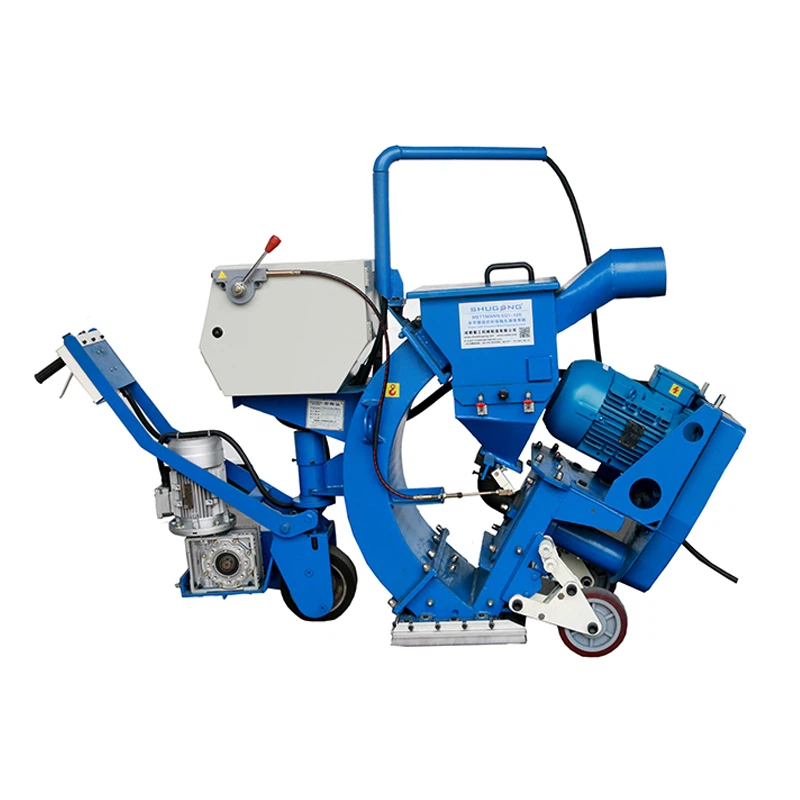
The environmental impact of the abrasive should also be taken into account. Abrasives that generate less dust and are recyclable are generally more environmentally friendly. Additionally, local regulations regarding waste disposal and environmental protection may influence the choice of abrasive.
Finally, the compatibility of the abrasive with the road shot blasting machine is essential. Different machines may have different requirements in terms of abrasive size, shape, and density. Using an incompatible abrasive can lead to reduced machine performance and even damage to the machine.
Conclusion
In conclusion, there are various types of abrasives that can be used in a road shot blasting machine, each with its own unique characteristics and applications. As a supplier of road shot blasting machines, I understand the importance of choosing the right abrasive for each project. Whether it's the reusability of steel shot, the cutting power of steel grit, or the environmental friendliness of copper slag, the choice of abrasive can significantly impact the success of a road project.
If you are planning a road shot blasting project and need advice on the best abrasive and machine combination, or if you are interested in purchasing a high - quality road shot blasting machine, please feel free to contact us. We are committed to providing you with the most suitable solutions for your specific needs. Our team of experts is always ready to assist you in making informed decisions and ensuring the smooth execution of your project.
References
- American Society for Testing and Materials (ASTM) standards related to abrasives for shot blasting.
- Industry publications on road surface treatment and shot blasting technology.
- Manufacturer's guidelines for road shot blasting machines and abrasives.
