

Hey there! As a supplier of Garage Shot Blasters, I often get asked about adapting these machines for curved surface blasting. It's a common challenge, but with the right approach, it can be done effectively. In this blog, I'll share some tips and tricks on how to make your garage shot blaster work well on curved surfaces.
First off, let's understand the basics. A shot blaster is a machine that uses abrasive materials to clean, roughen, or prepare a surface. It works by propelling these abrasives at high speed onto the surface, removing dirt, rust, paint, and other contaminants. While shot blasters are great for flat surfaces, curved surfaces present a different set of challenges.
One of the main issues with blasting curved surfaces is ensuring even coverage. Unlike flat surfaces, where the shot blaster can move in a straight line, curved surfaces require a more strategic approach. You need to make sure that the abrasive hits the surface at the right angle and with the right amount of force to achieve the desired results.
So, how do you adapt a garage shot blaster for curved surface blasting? Here are some steps you can take:
1. Choose the Right Nozzle
The nozzle is a crucial part of the shot blaster. It determines the pattern and direction of the abrasive flow. For curved surfaces, you'll want to use a nozzle that can provide a wide, fan-shaped spray pattern. This will help ensure that the abrasive covers a larger area and reaches all parts of the curved surface.
There are different types of nozzles available, such as flat fan nozzles and round nozzles. Flat fan nozzles are great for wider coverage, while round nozzles are better for more concentrated blasting. Depending on the size and shape of the curved surface you're working on, you may need to experiment with different nozzles to find the one that works best.
2. Adjust the Pressure
The pressure at which the shot blaster operates is also important. For curved surfaces, you may need to adjust the pressure to ensure that the abrasive hits the surface with the right amount of force. If the pressure is too high, the abrasive may bounce off the curved surface without effectively cleaning or preparing it. On the other hand, if the pressure is too low, the abrasive may not have enough power to remove the contaminants.
Start by setting the pressure at a medium level and then make adjustments as needed. You can test the pressure on a small, inconspicuous area of the curved surface to see how the abrasive behaves. If the surface isn't being cleaned properly, increase the pressure slightly. If the abrasive is causing too much damage or leaving marks, decrease the pressure.
3. Use a Flexible Hose
A flexible hose can make it easier to maneuver the shot blaster around curved surfaces. It allows you to reach areas that may be difficult to access with a rigid hose. Look for a hose that is long enough to reach all parts of the curved surface and has enough flexibility to bend and twist without kinking.
When using a flexible hose, make sure to keep it in good condition. Check for any signs of wear or damage, such as cracks or leaks, and replace the hose if necessary. A damaged hose can affect the performance of the shot blaster and may even pose a safety hazard.
4. Employ a Rotating or Oscillating Mechanism
Some shot blasters come with a rotating or oscillating mechanism that can help improve the coverage on curved surfaces. This mechanism moves the nozzle in a circular or back-and-forth motion, ensuring that the abrasive hits the surface from different angles.
If your garage shot blaster doesn't have a built-in rotating or oscillating mechanism, you can consider adding an aftermarket attachment. These attachments can be easily installed and can significantly enhance the performance of the shot blaster on curved surfaces.
5. Take Your Time
Blasting curved surfaces requires patience and precision. Don't rush the process. Take your time to move the shot blaster slowly and steadily around the curved surface, making sure to cover all areas evenly. It's better to make multiple passes over the surface with a lower pressure than to try to do it all in one go with a high pressure.
As you work, keep an eye on the surface to see how the abrasive is affecting it. If you notice any areas that aren't being cleaned properly or are being damaged, stop and make the necessary adjustments.
6. Consider the Abrasive Material
The type of abrasive material you use can also have an impact on the results of the blasting process. Different abrasives have different properties, such as hardness, shape, and size. For curved surfaces, you may want to choose an abrasive that is more rounded and less angular. This will help prevent the abrasive from getting stuck in the curves and causing damage to the surface.
Some common abrasive materials used in shot blasting include steel shot, aluminum oxide, and glass beads. Each material has its own advantages and disadvantages, so you'll need to choose the one that is best suited for the specific application and the type of curved surface you're working on.
Now, let's talk about some of the products we offer as a Garage Shot Blaster supplier. We have a wide range of shot blasters that are suitable for various applications, including curved surface blasting.
One of our popular products is the Steel Plate Shot Blasting Machine Steel Plate Shot blaster. This machine is designed to handle large steel plates, but it can also be adapted for curved surfaces with the right adjustments. It offers high efficiency and excellent cleaning results.
Another great option is our 24 Month Warranty CE/ISO9001 Approval Asphalt Shot Blaster. This shot blaster is specifically designed for asphalt surfaces, but it can also be used on other curved surfaces. It comes with a 24-month warranty and meets international quality standards.

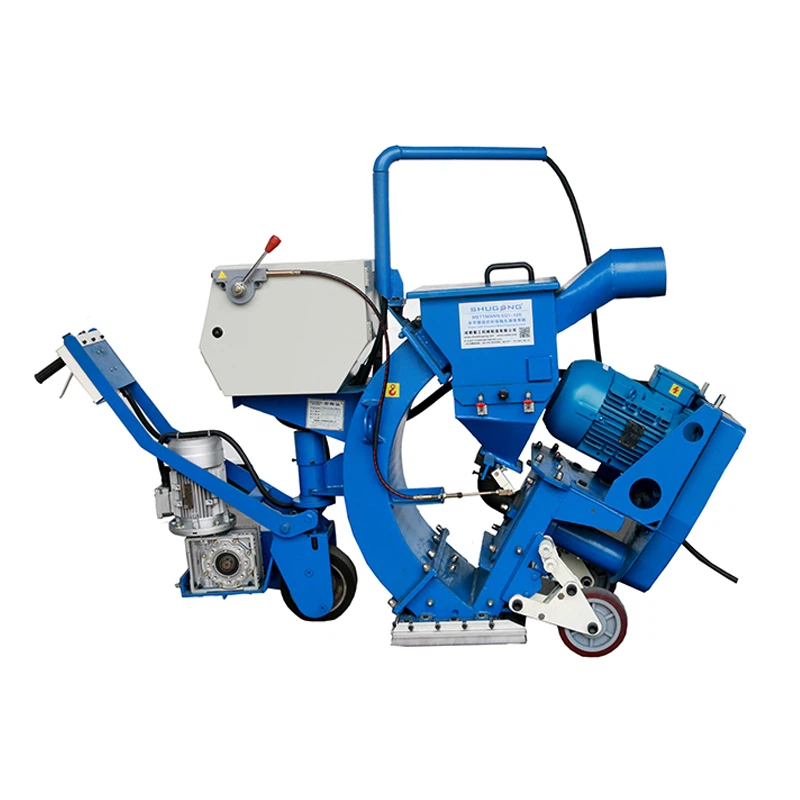
We also have a Line marking Shot Blaster that is ideal for removing old line markings on curved surfaces, such as roads and parking lots. It provides precise and efficient blasting, ensuring a clean and smooth surface for new line markings.
If you're interested in any of our products or have any questions about adapting a garage shot blaster for curved surface blasting, don't hesitate to reach out. We're here to help you find the right solution for your needs. Whether you're a professional contractor or a DIY enthusiast, we have the expertise and the products to support you.
In conclusion, adapting a garage shot blaster for curved surface blasting may seem challenging, but with the right techniques and the right equipment, it can be done successfully. By following the steps outlined in this blog and using our high-quality shot blasters, you can achieve excellent results on curved surfaces. So, if you're looking to take on a curved surface blasting project, give us a call and let's get started!
References
- Shot Blasting Technology Handbook, Third Edition.
- Surface Preparation and Coating Application Guidelines.


