

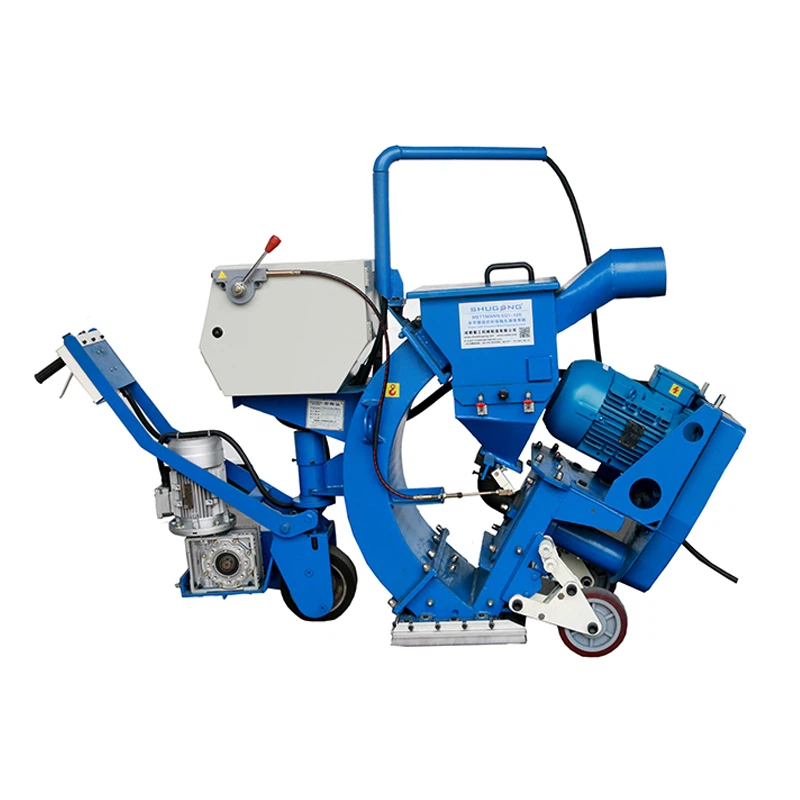
When it comes to concrete shot blast machines, selecting the right abrasive is crucial for achieving optimal results. As a supplier of Floor Shot Blast Machine, Road Shot Blasting Machine, and Steel Shot Blaster, I understand the importance of this decision. In this blog, I'll delve into the various types of abrasives suitable for concrete shot blast machines, considering factors such as hardness, shape, and cost.
Types of Abrasives
Steel Shot
Steel shot is one of the most commonly used abrasives in concrete shot blasting. It is made from high - carbon steel and comes in various sizes. The hardness of steel shot can range from 40 - 50 HRC (Rockwell hardness scale), which makes it suitable for heavy - duty applications.
The spherical shape of steel shot allows for efficient cleaning and surface profiling. When the steel shot impacts the concrete surface, it creates a uniform pattern of indentations, increasing the surface roughness. This is particularly useful for applications such as preparing concrete floors for coatings or adhesives, as the increased roughness provides better adhesion.
One of the advantages of steel shot is its durability. It can be reused multiple times, which reduces the overall cost of the blasting process. However, steel shot is relatively expensive compared to some other abrasives, and it may require a more powerful shot blast machine to operate effectively.
Steel Grit
Steel grit is another popular abrasive for concrete shot blasting. Unlike steel shot, which is spherical, steel grit has a angular shape. This angularity gives steel grit a more aggressive cutting action, making it ideal for removing stubborn contaminants, such as old paint, rust, or thick layers of dirt from the concrete surface.
The hardness of steel grit is typically higher than that of steel shot, ranging from 45 - 55 HRC. This higher hardness allows steel grit to penetrate deeper into the concrete, providing a more thorough cleaning and profiling.
Similar to steel shot, steel grit can be reused, but it may wear out faster due to its more aggressive nature. It is also more expensive than some other abrasives, but its effectiveness in difficult applications often justifies the cost.
Copper Slag
Copper slag is a by - product of the copper smelting process. It is composed of various metal oxides and silicates, and it has a granular shape. Copper slag is a cost - effective alternative to steel shot and steel grit.
The hardness of copper slag is relatively high, which enables it to effectively clean and profile concrete surfaces. It is suitable for light to medium - duty applications, such as cleaning small concrete areas or preparing surfaces for less demanding coatings.
One of the advantages of copper slag is its availability. It is widely produced as a waste product, which makes it relatively inexpensive. However, copper slag may contain trace amounts of heavy metals, such as lead and copper. Therefore, proper safety measures should be taken during the blasting process to prevent environmental contamination.

Garnet
Garnet is a natural abrasive that is mined from the earth. It is composed of silicate minerals and has a hardness of around 7 - 8 on the Mohs scale. Garnet has a sharp, angular shape, which gives it a good cutting ability.
Garnet is often used in applications where a high - quality surface finish is required. It is suitable for blasting concrete surfaces that will be exposed to the public, such as sidewalks or building facades. Garnet produces a clean, dust - free surface, and it does not contain any harmful chemicals.
However, garnet is more expensive than some other abrasives, and it may not be as effective as steel shot or steel grit in heavy - duty applications.
Factors to Consider When Choosing an Abrasive
Surface Condition
The condition of the concrete surface is one of the most important factors to consider when choosing an abrasive. If the concrete surface is relatively clean and only requires light profiling, a less aggressive abrasive, such as copper slag or garnet, may be sufficient. On the other hand, if the surface is heavily contaminated or requires a deep profile, a more aggressive abrasive, such as steel grit or steel shot, should be used.
Desired Surface Finish
The desired surface finish also plays a role in abrasive selection. If a smooth, uniform finish is required, steel shot may be the best choice, as its spherical shape creates a more consistent pattern. If a more textured finish is desired, steel grit or garnet may be more appropriate, as their angular shapes create a rougher surface.
Cost
Cost is always a consideration in any blasting project. Steel shot and steel grit are generally more expensive than copper slag and garnet. However, the durability and effectiveness of steel shot and steel grit may offset the higher initial cost, especially for large - scale or heavy - duty projects.
Environmental Impact
The environmental impact of the abrasive should also be taken into account. Some abrasives, such as copper slag, may contain heavy metals that can be harmful to the environment. Therefore, it is important to choose an abrasive that is environmentally friendly and to follow proper disposal procedures.
Conclusion
Selecting the right abrasive for a concrete shot blast machine is a critical decision that can significantly affect the outcome of the blasting process. Each type of abrasive has its own unique properties, advantages, and disadvantages.
Steel shot and steel grit are suitable for heavy - duty applications, providing efficient cleaning and surface profiling. Copper slag is a cost - effective alternative for light to medium - duty applications, while garnet is ideal for high - quality surface finishes.
As a supplier of concrete shot blast machines, I can provide you with expert advice on choosing the right abrasive for your specific needs. Whether you are working on a small residential project or a large commercial development, I can help you select the most appropriate abrasive to achieve the best results.
If you are interested in learning more about our Floor Shot Blast Machine, Road Shot Blasting Machine, or Steel Shot Blaster, or if you have any questions about abrasive selection, please feel free to contact us. We look forward to discussing your project and helping you find the perfect solution.
References
- "Shot Blasting Technology Handbook", Industry Press, 2018
- "Concrete Surface Preparation for Coatings", American Concrete Institute, 2020
- "Abrasive Materials and Their Applications", International Journal of Abrasive Technology, Vol. 15, 2021
